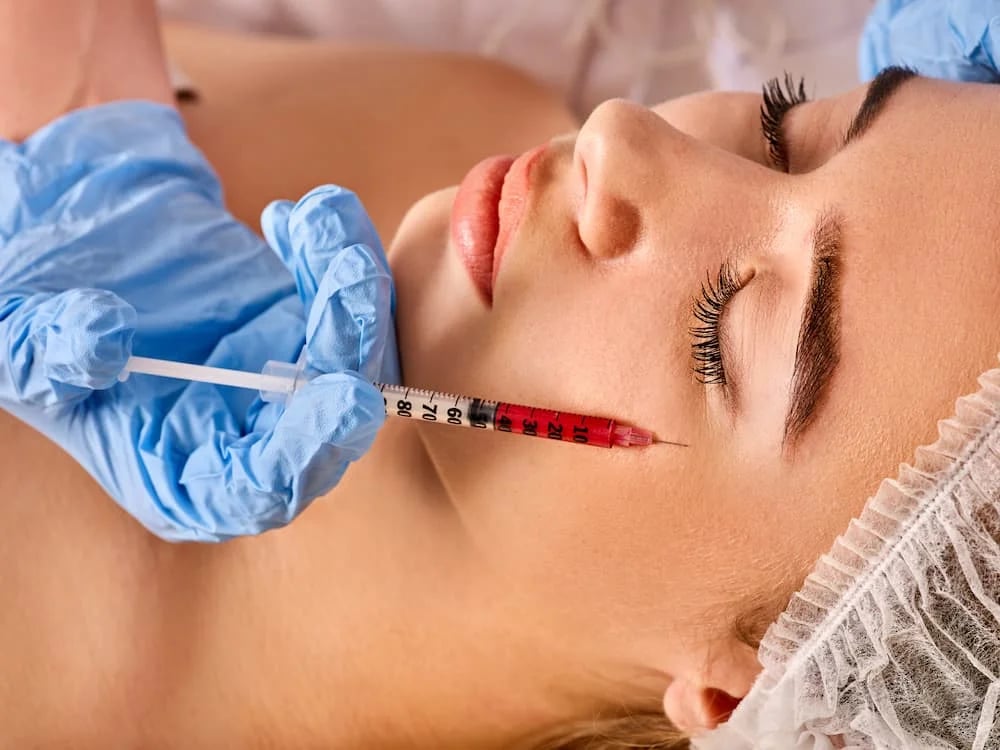
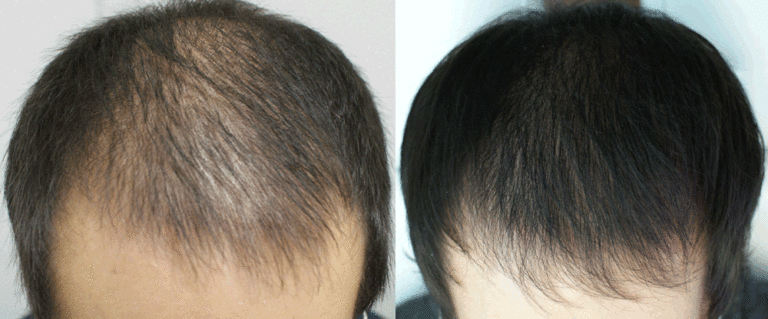
Platelet-Rich Plasma (PRP) therapy is used in hair restoration for natural-looking results, offering a non-surgical, painless, totally natural alternative medical procedure for the treatment of hair loss or hair thinning. PRP is suitable for both men and women, and because it’s an injectable treatment that uses the patient’s own blood, it carries a strong safety profile with minimal risk of allergic reaction or rejection.
How PRP Hair Restoration Works
Our blood plasma contains active growth factors that can promote hair growth. During treatment, a small blood sample is drawn from the patient, then processed in a centrifuge to separate and concentrate the platelet-rich plasma from the rest of the blood components. Using a thin needle, this concentrated PRP is then injected directly into the scalp in the areas experiencing thinning or hair loss. Once injected, the growth factors in your blood cells do their job, stimulating dormant hair follicles, improving blood supply to the follicles, and naturally encouraging hair growth from within.
Who Can Benefit From PRP Hair Restoration
PRP hair restoration is suitable for both men and women experiencing various patterns of hair thinning:
- Androgenetic alopecia, the most common form of hair loss in both men and women, often called male or female pattern hair loss
- Diffuse thinning, where hair loss occurs more evenly across the scalp rather than in a specific pattern
- Early-stage hair loss, since PRP tends to be most effective when follicles are still present but weakened, rather than in areas of complete, long-standing baldness
- Patients seeking a non-surgical alternative to hair transplant procedures, either as a standalone treatment or to support results following a transplant
What to Expect During Treatment
A PRP hair restoration session typically takes about 60 to 90 minutes, including the blood draw, processing time, and injection process. A topical numbing agent is often applied to the scalp beforehand to minimize discomfort, and most patients describe the treatment as well-tolerated, with mild soreness or tenderness in the treated area for a day or two afterward being the most common side effect. There is minimal to no downtime, allowing most patients to return to their normal activities immediately following treatment.
Why a Series of Treatments Produces the Best Results
Because PRP works by stimulating the body’s own regenerative processes, results build gradually over a series of treatments rather than appearing after a single session. Most patients notice initial improvements, including reduced shedding and the appearance of new, finer hairs, within two to three months, with more significant thickening and density improvements developing over the course of the full treatment series. This is why the three-treatment package, spaced four to six weeks apart, tends to produce noticeably better outcomes than a single isolated session, and why many patients continue with periodic maintenance treatments after their initial series to sustain results long-term.
The Hormonal Connection to Hair Loss
While PRP addresses hair restoration at the follicle level, it’s worth understanding that hair loss often has an underlying hormonal component that deserves separate evaluation. Declining testosterone and increased sensitivity to its byproduct DHT are common drivers of pattern hair loss in men, while declining estrogen and thyroid dysfunction frequently contribute to hair thinning in women, particularly during perimenopause and menopause. Our piece on do you have these symptoms of hypothyroidism covers one commonly overlooked hormonal cause of hair thinning that’s worth ruling out alongside any restoration treatment. For patients whose hair loss may be driven by an underlying hormonal imbalance, our hormone therapy programs can address the root cause directly, complementing the follicle-level stimulation that PRP provides.
Combining PRP With a Comprehensive Hair Health Strategy
For the most effective, lasting results, many patients pair PRP hair restoration with a broader evaluation of factors that influence hair health. Our functional medicine and regenerative medicine approach considers nutritional status, stress levels, and hormonal balance alongside targeted treatments like PRP, since addressing only the follicle-level symptom while ignoring an underlying hormonal or nutritional cause often produces less complete, less durable results than addressing both together, a principle also central to our andropause evaluations for men experiencing hair thinning alongside other symptoms of declining testosterone.
PRP for Both Men and Women: A Shared Mechanism, Different Patterns
While the biological mechanism behind PRP is the same regardless of sex, the pattern of hair loss it’s treating often looks quite different between men and women. Men typically experience a more predictable, patterned recession, thinning at the temples and crown that follows a well-documented progression, while women more often experience diffuse thinning spread across the scalp, without the same predictable pattern. This distinction matters for treatment planning, since a provider experienced with both presentations can tailor injection patterns to the specific areas of need, rather than applying a single standard approach regardless of how the hair loss is actually distributed.
Setting Realistic Expectations
PRP hair restoration works best for follicles that are weakened but still present, meaning it’s generally more effective for early to moderate hair thinning than for areas of long-standing, complete baldness where follicles are no longer active, similar to how micro-needling works best on skin that still has active regenerative capacity rather than more severely damaged tissue. A consultation beforehand can help assess the current state of your hair and scalp, and set realistic expectations for what PRP can achieve for your specific pattern and stage of hair loss.
Ready to Get Started?
Our team can help assess your hair loss pattern and determine whether PRP, hormone evaluation, or a combination of both offers the best path toward restoring your hair’s fullness and density.
Frequently Asked Questions
How does PRP hair restoration work?
PRP uses concentrated growth factors from your own blood plasma, injected into the scalp, to stimulate dormant hair follicles and improve blood supply, naturally encouraging hair growth from within.
Is PRP hair restoration painful?
Most patients tolerate the treatment well, especially with a topical numbing agent applied beforehand, with mild soreness in the treated area for a day or two being the most common side effect.
How many PRP treatments are needed for results?
A series of three treatments spaced four to six weeks apart generally produces noticeably better results than a single session, since PRP works by gradually stimulating the body’s own regenerative processes.
Is PRP effective for all stages of hair loss?
PRP tends to be most effective for early to moderate hair thinning where follicles are weakened but still present, and is generally less effective for areas of long-standing, complete baldness.
Can hormonal imbalances cause hair thinning?
Yes. Declining testosterone and DHT sensitivity in men, and declining estrogen or thyroid dysfunction in women, are common hormonal contributors to hair thinning that may benefit from evaluation alongside PRP treatment.