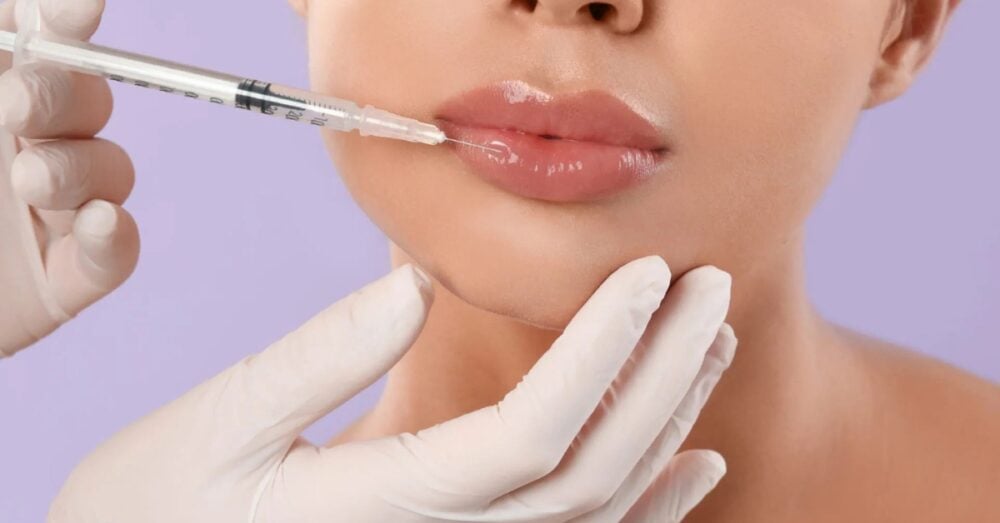

Dysport vs Botox in Phoenix, AZ: Which Injectable Is Right for You?
The short answer: Dysport kicks in faster (2-3 days) and spreads across wider areas like the forehead. Botox is more precise for targeted spots like crow’s feet. Both cost roughly $300-$600 per treatment area and last 3-4 months.
That doesn’t mean one is automatically better. It means they behave a little differently once they’re injected. In our Phoenix practice, the right choice usually comes down to the treatment area, how strong your facial muscles are, how quickly you want to see a change, and how much precision you want.
If you’re comparing the two because your forehead lines are hanging around after years of Arizona sun, or you’re starting to notice crow’s feet sticking around even when your face is at rest, this is the conversation worth having. At Ageless Health Institute near Cave Creek Road and Loop 101, we talk patients through this every week in plain English, not injector jargon.
Side-by-Side Comparison: Dysport vs Botox
| Feature | Dysport | Botox |
|---|---|---|
| Onset Time | Often 2-3 days; useful when you want quicker softening | Usually 3-7 days; still not instant, but very predictable |
| Duration | About 3-4 months for most patients | About 3-4 months for most patients |
| Spread Pattern | Wider diffusion across larger muscle groups | More localized placement for tighter control |
| Best For | Broader areas like the forehead and stronger glabellar lines | Targeted areas like crow’s feet, bunny lines, and fine brow adjustments |
| Units Needed | Usually 40-60 units per treatment area | Usually 20-40 units per treatment area |
| Cost Range | About $4-6 per unit; often ~$300-600 per area | About $10-15 per unit; often ~$300-600 per area |
| Recovery | Minimal downtime; normal day is usually fine | Minimal downtime; normal day is usually fine |
What Dysport and Botox have in common
Both products are botulinum toxin type A neuromodulators. In normal-person language, that means they temporarily relax the muscles that crease the skin when you frown, squint, or raise your brows. They don’t fill hollows. They don’t replace lost facial volume. They reduce movement so the skin has a chance to smooth out.
That’s an important distinction in Phoenix, where a lot of patients come in saying they want to “fix lines,” but the real issue is mixed. Some lines are caused by muscle movement. Some are from volume loss. Some are from years of sun exposure in the Valley. If the bigger issue is facial volume rather than muscle pull, we may talk about pairing a neurotoxin with dermal fillers instead of just adding more units and hoping for the best.
Both are FDA-approved botulinum toxin type A products, both have been used in cosmetic medicine for years, and both typically last 3–4 months. The appointment is in-office, downtime is minimal, and either one can look very natural when dosing and placement are matched to your face rather than copied from a generic injection map.
Dysport: faster onset and broader spread
Dysport is often the better fit when the treatment area is broad and the muscle movement is strong. The classic example is the forehead, especially for patients who live in the desert, squint in bright light, and develop those long horizontal lines earlier than they’d like. Dysport tends to diffuse a bit more, which can help create a smooth result across a wider area.
The other thing patients like about Dysport is speed. It’s common to start seeing movement soften in 2-3 days. That’s not a promise for every face, but it is one of the reasons people ask for it before weddings, reunions, photos, or work events. If you’re the kind of person who gets treated and then checks the mirror the next morning, Dysport is usually the quicker of the two.
The trade-off is the same thing that makes it useful: spread. Broader diffusion can be an advantage in the forehead or between the brows, but it also means you want thoughtful placement. This isn’t a product you use casually around every small facial detail just because it kicks in fast. The injector still has to respect brow position, natural asymmetry, and how much movement you actually want to keep.
Dysport pricing also confuses patients at first because the unit number sounds bigger. That’s normal. Dysport is measured differently, so a typical treatment area may use around 40-60 units, sometimes more depending on muscle strength. At roughly $4-6 per unit, the final treatment-area total often lands in the same general $300-$600 range people see with Botox.
In other words, don’t let the raw unit count throw you. Forty or fifty units of Dysport is not automatically “more” than twenty units of Botox in any meaningful apples-to-apples way. Different product. Different conversion. Similar overall spend in many real-world cases.
Botox: more precision in smaller or more detailed areas
Botox is still the brand most patients know first, and there are good reasons for that. It’s been around longer in cosmetic medicine, it’s extremely well studied, and it gives injectors very consistent control. When someone needs tighter placement, Botox is often the product that makes the most sense.
Crow’s feet are a good example. Around the eyes, small differences matter. You want to soften the etched smile lines without making the eye area look flat or heavy. Botox’s more localized effect can make that easier when you’re working in a smaller zone and trying to preserve natural expression.
The same logic can apply to bunny lines on the nose, subtle brow balancing, or a patient who says, “I want to look less tired, but I still want my face to look like my face.” Botox isn’t always the answer, but it’s often the more precise tool when the plan calls for detail work rather than broad coverage.
Botox does usually take a little longer to show. Many patients notice changes in 3-7 days, with fuller results settling in by about two weeks. Some people actually like that slower rollout. It can feel less abrupt, especially if they’re new to injectables and don’t want to feel like they changed overnight.
Botox pricing is typically around $10-15 per unit, with many treatment areas landing around 20-40 units depending on the area and the strength of the underlying muscle. Again, that often works out to roughly the same $300-$600 per treatment area you see with Dysport. The unit price is higher, but the unit count is usually lower.
Cost in Phoenix: look at treatment-area price, not just unit price
If you only compare cost per unit, Dysport looks cheaper and Botox looks more expensive. That’s incomplete math. The unit systems aren’t equivalent, so the better question is: what does it usually cost to treat the area you’re actually worried about?
For Dysport, a common range is about $4-6 per unit, and a typical treatment area may use 40-60 units. For Botox, a common range is about $10-15 per unit, and a typical treatment area may use 20-40 units. Depending on the pattern of your wrinkles, your muscle strength, and whether you’re treating one area or several, either one can end up in that familiar $300-$600 per-area range.
There are exceptions, of course. Someone with very strong glabellar muscles may need more product than someone treating light early lines. Men often need more units than women because the muscle mass is different. Patients who want a very soft, “still expressive” look may choose a lighter first treatment, while someone trying to fully quiet a strong forehead pattern may need more.
Here’s the honest part: the cheapest quote isn’t always the best value. A low advertised price can mean under-dosing, rushed placement, or a treatment plan that doesn’t match the way your face moves. It’s frustrating to pay less and still feel like nothing really changed. A thoughtful evaluation matters more than a coupon.
Here’s what we actually see in practice
Patients who come in from the Cave Creek area, Desert Ridge, and nearby parts of the Valley usually aren’t asking for a brand as much as they’re asking for a result. They want their forehead to look smoother in bright Arizona light. They want crow’s feet to soften in photos. They don’t want to look frozen, and they definitely don’t want to look “done.”
For broader forehead treatment, Dysport often makes a lot of sense because it can spread more evenly across that larger muscle pattern. For precise outer-eye lines or small balancing tweaks, Botox is often easier to fine-tune. If someone has been treated before and tells us, “I loved how fast Dysport worked” or “Botox always sits better around my eyes,” that history matters. Your own past response is useful data.
We also see plenty of patients who need a mixed conversation, not just a Dysport-versus-Botox answer. Sometimes the motion is only half the story. If cheeks have flattened a bit, if under-eye shadows are coming from volume loss, or if smile lines are more structural than dynamic, more neurotoxin won’t fix the whole picture. That’s where the treatment plan has to get more nuanced.
And yes, lifestyle plays a role. Patients who exercise hard, sweat a lot outdoors, or metabolize injectables quickly sometimes feel like everything wears off faster. People who spend a lot of time driving around Phoenix with the sun in their face often have stronger squinting patterns than they realize. None of that means one brand failed. It means anatomy and habits matter.
How we help patients decide at Ageless Health Institute
When you come in, we don’t start with a script. We look at your face in motion. We ask what bothers you most. We ask whether you want a softer look, a more polished look, or simply to stop one area from pulling so hard. Then we match the product to the goal.
That evaluation matters because the same forehead line can mean different things in different patients. One person needs broader relaxation across the upper face. Another needs more careful control to avoid feeling heavy through the brow. Another doesn’t need a neurotoxin-first plan at all and is better served by skincare, resurfacing, or a combination approach.
The appointment itself is quick. Most visits take about 15-30 minutes depending on how many areas you’re treating. We use very small needles. Most patients describe the injections as a few quick pinches. You can usually go right back to work, errands, school pickup, or the rest of your day.
Afterward, we generally recommend taking it easy on strenuous exercise for the rest of the day, avoiding unnecessary rubbing of the treated areas, and giving the product time to settle in. Full results are not immediate. Even the faster product still needs a few days. That’s normal.
If you’ve never had injectables before, the first treatment is often the best time to be measured rather than aggressive. You can always add more nuance later. It’s much harder to talk someone into liking a result that feels too strong for their comfort level.
Choosing the right injectable for your needs
If you like simple decision rules, this is the practical version.
Choose Dysport If You Want:
- Faster visible softening, often within 2-3 days
- Treatment for broader areas like the forehead or stronger glabellar movement
- A product that can spread more evenly across a wider muscle pattern
- A treatment plan built around speed and coverage rather than pinpoint precision
Choose Botox If You Need:
- More precise targeting for specific wrinkles or smaller areas
- Treatment around details like crow’s feet or subtle brow shaping
- A highly familiar product with a long clinical track record
- A little more control when preserving expression is a top priority
Are you a candidate?
If you are a healthy adult bothered by expression lines and you want a straight answer about which product fits your face, a 15-minute consult is the fastest path. Both products are avoided during pregnancy and nursing and in patients with certain neurological conditions or a documented allergy to botulinum toxin. Your medical history and current medications factor into the conversation. During your consultation at Ageless Health Institute, we evaluate facial anatomy, muscle movement, and your prior treatment history before recommending anything.
Treatment experience in Phoenix
Whether you choose Dysport or Botox, the treatment process is straightforward at Ageless Health Institute. Our office is near Cave Creek Road and Loop 101, which makes it convenient for patients coming from North Phoenix, Desert Ridge, Cave Creek, and nearby Valley neighborhoods.
The injection process takes about 15-30 minutes depending on the areas treated. We use fine needles to place the product into the targeted muscles, not just the approximate area. That sounds obvious, but it matters. Good injectable work is about placement, dose, and restraint.
Post-treatment care is similar regardless of product choice. Most patients return to normal activity right away, though we usually recommend skipping strenuous workouts until the next day. Results develop over several days, with full settling typically visible within about two weeks.
Phoenix’s year-round sun exposure also changes the bigger conversation. If you spend a lot of time outdoors, skin quality matters along with muscle movement. Sunscreen, skincare, resurfacing, and realistic maintenance plans all play a role. Injectables help, but they work best when they’re part of a broader, sensible plan.
Frequently Asked Questions
Is Dysport or Botox more expensive?
Usually, they’re closer in total cost than patients expect. Dysport often runs about $4-6 per unit and may use 40-60 units per area. Botox often runs about $10-15 per unit and may use 20-40 units per area. That means either one may end up around $300-$600 per treatment area, though your exact cost depends on anatomy, goals, and how many areas you treat.
Can I switch between Dysport and Botox?
Yes. Patients switch between them all the time. Sometimes it’s because they want faster onset and try Dysport. Sometimes it’s because they want a little more precision in a certain area and try Botox. We usually recommend making the switch thoughtfully rather than bouncing around every visit, because it’s easier to judge your result when the plan is consistent.
Which product lasts longer?
For most patients, both last about 3-4 months. In real life, duration depends more on your metabolism, muscle strength, workout habits, and how much product was used than on the logo on the vial. Some patients personally feel they get a little longer from one brand, but there isn’t a universal winner for everyone.
Are side effects different between products?
They have very similar side effect profiles. The common short-term issues are mild redness, a small bruise, tenderness, or a temporary headache. More significant problems are uncommon, but they matter, which is why product selection and injection technique both need medical judgment. In most cases, the injector’s assessment and placement matter more than the small brand differences patients read about online.
Which works better for preventing new wrinkles?
Both can help prevent dynamic lines from getting etched in more deeply because both reduce the repeated folding of the skin. If your goal is prevention, consistency matters more than brand loyalty. The better product is usually the one that fits your anatomy, your goals, and the areas you’re treating well enough that you’ll actually keep up with maintenance.
Is one better if I still want movement?
That depends more on dosing and placement than on the brand name. Patients sometimes assume Dysport means soft and Botox means frozen, or vice versa. That’s too simplistic. A natural-looking result comes from treating the right muscles with the right amount of product. If you want to keep expression, say that clearly during your consultation. That’s part of the plan.
Expert Injectable Treatment in Phoenix
Ageless serves patients from Phoenix, the Cave Creek corridor, and the broader Valley, and the practice has built a strong local reputation with 4.8-star reviews and hundreds of patient ratings across major platforms. That matters, but the more useful thing for you is this: we take time to explain the trade-offs honestly. If Dysport makes more sense, we’ll say that. If Botox makes more sense, we’ll say that. If neither is the right first step, we’ll say that too.
If you’re trying to decide between Dysport and Botox, the easiest next step is to get an in-person assessment instead of guessing from social media or pricing menus. We’ll look at the way your face moves, talk through your goals, and map out a plan that fits your anatomy and comfort level.
Call Ageless Health Institute at 602-680-7703 to schedule your consultation, or learn more about Botox treatment options if you already know that’s the direction you want to explore.
The information on this page is for educational purposes and is not medical advice. Individual results may vary. Consult with a qualified healthcare provider.