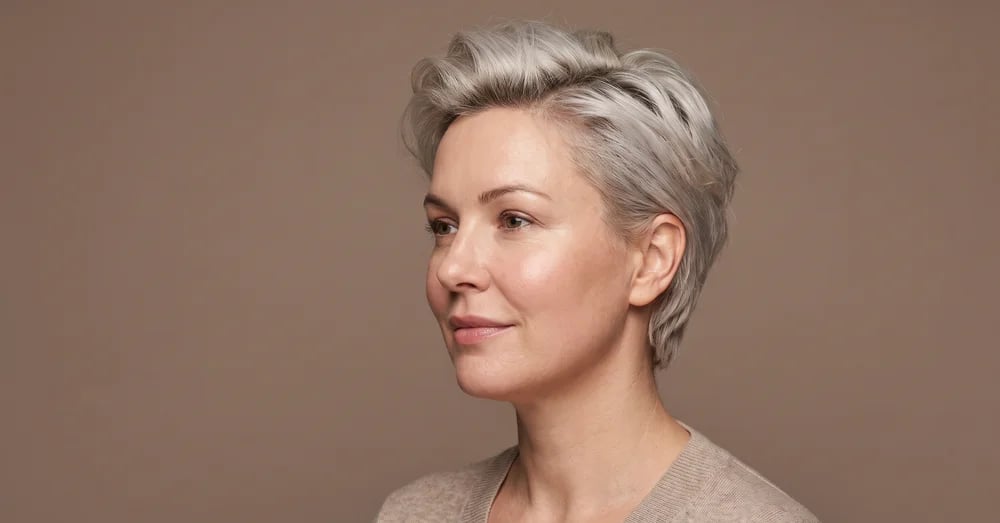
Weight loss on a modern medication can be one of the best things a person does for their health, and it can also change their face in ways they did not expect. A friend says you look tired. A photograph at a wedding shows hollow temples that were not there last year. The jawline looks sharper in some places and softer in others. The skin on the neck, once taut, looks a little loose.
None of these changes mean the medication is wrong for you, and none of them are unique to any one drug. They are the face’s response to losing weight. What is different about the current era is speed. Medications such as tirzepatide and semaglutide can produce substantial weight loss within months, which gives the skin and the deeper tissues less time to adjust than they would during a slower diet.
At Ageless Health Institute in Phoenix, the same clinic that supports patients through medical weight loss also treats the facial changes that follow. This guide explains what is happening beneath the surface, which treatments address which problem and, importantly, when to do what, since the best time to treat the face is often not the moment you start to notice a change.
How the weight loss program and the aesthetic plan fit together
In the clinic, weight loss starts with labs and a medical evaluation. Stephen Noble, PA, who leads the practice’s hormone and weight loss care, reviews the results, chooses a medication and starts a titration schedule, increasing the dose gradually over about 16 to 20 weeks. Throughout, patients are monitored, and the plan is adjusted to how they respond.
This structure matters for aesthetics because it gives the team a timeline. A patient who is eight weeks into titration is in a different place than one who has reached a stable dose and a stable weight. Knowing where you are on that path lets the aesthetic provider recommend the right level of intervention, and it prevents the common mistake of treating the face as if it were a fixed target.
Patients who are also being evaluated for hormone imbalance can discuss that at the same time, and the practice’s overview of hormone therapy explains how it is approached. Treating hormones, weight and skin as a connected whole is more coherent than addressing each separately, and it avoids the situation in which a patient receives conflicting advice from unrelated providers.
For aesthetic options, the practice groups its injectable services together, and the injectables overview is a good place for patients to see the full menu before a consultation.
What the face is actually losing
The face is not a single tissue. It is a layered structure with skin on top, fat in distinct compartments beneath it, muscle and connective tissue below that and bone at the base. When body weight falls, each layer responds differently.
The fat compartments are the most obvious. Facial fat is not a uniform blanket. It sits in separate pads in the cheeks, the temples, around the eyes, in the jowls and along the jaw. During weight loss, some of these pads shrink more than others, which changes the proportions of the face. The cheeks flatten, the temples hollow, the area under the eyes sinks and the folds around the mouth deepen.
The skin is the second layer to consider. Skin is elastic, but it has limits, and age and sun damage reduce its ability to retract. A younger person with healthy skin often bounces back from weight loss with less visible laxity. A person in their fifties or sixties, especially someone who has lived in the Arizona sun for decades, has skin that has less recoil, so loosened skin is more noticeable.
Collagen and the supporting framework are the third. These deeper structures also change with age and with weight, and they determine how well the face holds its shape.
Bone is slower to change, but it too recedes with age, and in a face that has lost fat the underlying skeleton becomes more visible. This is part of why a thin face can look older than a fuller one.
Why rapid loss makes it more noticeable
Gradual weight loss gives skin and tissue time to adapt. Rapid loss compresses that process. The fat shrinks faster than the skin can tighten, which makes laxity appear. The proportions of the face change within a few months, so the person looking in the mirror and the people around them notice the difference more abruptly.
There is also a psychological effect. A person who has worked hard to lose weight often expects to look younger and healthier, and a face that looks gaunt or tired is a disappointing surprise. It helps to know in advance that this is a common pattern and that it can be addressed, because disappointment sometimes leads patients to stop a medication that is serving them well.
It is worth stressing that facial changes alone are not a reason to stop treatment. The decision to start, continue or stop a weight loss medication belongs to the patient and the prescribing provider, based on health, not appearance. Aesthetic treatment is a way to protect and restore the face while the medical goals continue.
The first signs patients mention
Patients rarely arrive saying they have lost fat compartments. They describe what they see and what others say. I look older in photos. My eyes look sunken. My face looks long. People ask if I am sick. My smile lines are deeper. My cheeks used to be round and now they look flat.
Each of these maps to a specific change. Looking older in photographs usually reflects flattened cheeks and a hollow midface, because the youthful face is built on a gentle curve from the cheekbone to the jaw. Sunken eyes reflect loss of fat around the orbit and cheek. A long face reflects loss of volume at the sides, which makes the vertical dimension stand out. Deeper smile lines often follow when the cheek no longer supports the tissue above them.
Naming the pattern is helpful because it points to the solution. A patient who can say my cheeks look flat has already identified the starting point for treatment, and the provider can build from there.
Timing: when to treat and when to wait
The most useful guidance is about timing.
During active weight loss, the face keeps changing. Treating too early risks placing volume that no longer matches the face a few months later. Treating too late means living with changes that could have been softened.
A common approach is a staged plan. During the active phase, the focus is on skin quality and on small, targeted volume corrections where the change is already clear. As weight stabilizes, the focus shifts to restoring structure and treating laxity.
The practice’s weight loss program uses structured titration, with the dose increased in steps over 16 to 20 weeks, and patients typically see the face change during and after that period. A provider who knows your titration schedule and your goal weight is in a good position to advise when the face has reached a stable point. This is one advantage of getting both weight loss care and aesthetic care in one place. The aesthetic plan can follow the medical plan instead of guessing at it.
For patients who have already lost weight and are stable, the answer is simpler: treat now.
Protecting skin from the inside
Nutrition during weight loss affects how skin fares. When food intake falls sharply, protein intake can fall with it, and skin, which is constantly renewing, depends on a steady supply of amino acids, along with hydration and micronutrients. This is a matter for the patient’s weight loss provider, who monitors labs and guides diet, and it is mentioned here because patients sometimes overlook it.
The practical message is that supporting your skin and muscle during weight loss is not cosmetic vanity. It is part of doing weight loss well. Patients who work with a provider on adequate protein, hydration and activity often maintain better tone in both body and face, and they are better candidates for aesthetic treatment later because their tissue is healthier. Any specific nutrition plan should come from the prescribing provider and not from a general article.
Fillers: replacing what was lost
Hyaluronic acid fillers are the most direct way to restore volume. Because they are placed precisely, they can be used to rebuild the cheeks, soften hollow temples, support the under-eye area and refine the jawline.
The practice offers a range of products, described on its page for dermal fillers. Different products have different properties: some are soft and flexible and suit mobile areas, while others are firmer and provide structural lift. A provider chooses based on the location and the effect needed.
An important principle in a weight-losing face is restraint. If a patient is still losing weight, placing a large amount of filler can produce a face that looks overfilled in one area and still hollow in another. Small amounts placed strategically are better, with the option to add more later.
Fillers are also adjustable. Hyaluronic acid can be dissolved if needed, which makes it a reasonable choice while the face is still changing. That reversibility is one reason many providers favor it during the active phase of weight loss.
The under-eye area
Hollowing under the eyes is among the most common complaints after weight loss. The fat pads in this area shrink, the tear trough deepens and shadows appear, which gives the face a tired look no matter how much sleep the patient gets.
This is a delicate area, and treatment requires skill. The practice has written about dermal fillers for under eyes, including who is a good candidate and what to expect. It is worth noting that not everyone is a good candidate for under-eye filler, because thin skin, puffiness or pigmentation can limit results. A careful assessment is more important here than anywhere else on the face.
In some patients, restoring volume in the cheek supports the under-eye area indirectly and reduces the need for filler directly beneath the eye. A provider who looks at the whole midface is more likely to find the minimal solution than one who treats the shadow in isolation.
Faces differ, and so do the changes
Two people who lose the same weight can end up with very different faces. Genetics determine where a person stores facial fat and how quickly it is lost. Some people have naturally full cheeks and lose them early. Others hold volume in the temples and lose it late. Bone structure matters too: a face with prominent cheekbones tends to age gracefully through weight loss, while a face with a flatter midface shows hollowing more readily.
Age is the largest variable. A person in their thirties has more collagen, more elastic skin and stronger support, so they often recover well. A person in their fifties and beyond has less of all three, and the same weight loss produces more visible change. Sun history matters as well, particularly in Arizona, where decades of exposure thin the skin and reduce its recoil.
Because of this variation, there is no standard plan. Comparing your face to a friend’s is not useful, and a treatment that worked well for someone else may not be right for you. A consultation is about your pattern, not the average one.
Collagen stimulation with Sculptra
Where filler replaces volume directly, Sculptra works differently. It is an injectable that stimulates the body to produce its own collagen over time. Results build gradually across a series of sessions and, according to the practice, can last for a good while with appropriate maintenance.
Sculptra suits the weight-losing face for two reasons. First, it improves the quality and thickness of the tissue and not just the volume, which addresses laxity as well as hollowness. Second, because results develop slowly, it is forgiving in a face that is still changing.
The practice’s page on Sculptra in Phoenix explains the treatment, and its article on how long Sculptra lasts gives a realistic picture of the timeline. The key expectation is patience. Patients should not expect to see the full effect right away, and sessions are spaced weeks apart.
Radiesse: structure and lift
Radiesse occupies a middle ground between filler and collagen stimulator. It provides immediate volume and structural support and also stimulates collagen in the surrounding tissue. It is often used for the cheekbones, the jawline and the chin.
The practice describes the product on its Radiesse page. For a patient with a loss of support in the lower face, where the jawline has softened and the jowls have begun to appear, it can restore definition. Its firmness makes it suitable for areas that need lift, and a provider will decide where it is appropriate.
Because Radiesse is not as easily reversible as hyaluronic acid, it is usually reserved for patients whose weight is stable or nearly so. Placing a long-lasting structural product into a face that is still changing is the kind of choice a thoughtful provider avoids.
What other people notice, and what you notice
There is often a gap between what a patient sees in the mirror and what others notice. Patients tend to focus on specific details: a fold, a shadow, a bit of looseness. Others tend to notice the overall impression, such as whether the person looks rested, healthy and vibrant.
This matters for planning. A treatment that corrects a detail but leaves the overall impression unchanged may not satisfy the patient. Conversely, a modest change in the right place, such as restoring support under the eyes or at the cheekbone, can transform the overall impression without changing the details very much.
Good providers start from the overall impression and work down to the details. They take photographs from several angles and in different lighting, because the face looks different in each, and they compare them with the patient’s goals. If you find yourself obsessing over a single feature, it can help to look at photographs of your whole face, or to ask a trusted friend what they notice first.
Skin quality: the neglected half
Volume is only one dimension. Many patients who lose weight find that their skin looks thinner, drier and crepey, and no amount of volume replacement fixes that on its own.
Several treatments target skin quality. SkinVive is designed to improve the smoothness and hydration of skin, and its dedicated page explains how it differs from a traditional filler. Microneedling stimulates collagen by creating tiny controlled injuries, and radiofrequency skin resurfacing uses energy to tighten and refine the surface.
These treatments are particularly relevant for patients who have mild to moderate laxity. They cannot do what surgery does, but they can improve how the skin looks and feels. They also combine well with volume treatments, because a face with restored volume and better skin quality looks more complete than one with only one of the two.
Loose skin on the lower face and neck
The jawline and neck are where laxity is often most distressing. Skin that has lost fat beneath it can droop along the jaw and create jowls, and the neck may develop folds and banding.
For mild laxity, non-surgical options can help. The practice offers PDO threads, which can provide a modest lift, and radiofrequency treatments can tighten skin. Patients should be realistic about what these accomplish. They produce subtle improvements and not the result of a surgical lift.
For significant laxity, surgery may be the better answer, and an honest provider will say so. A patient who has lost a great deal of weight and has substantial loose skin should not feel pressured to pursue repeated non-surgical treatments that will not achieve what they want.
When surgery is the honest answer
Non-surgical treatments are valuable, but they have limits, and a responsible provider will say when those limits have been reached. After substantial weight loss, some patients have laxity in the lower face, jawline and neck that no injectable or energy device can fully correct. Expecting a syringe to do the work of a lift leads to disappointment and wasted effort.
Signs that surgery may be worth discussing include significant jowling, a loose neck with visible bands, skin that hangs when the head is tilted and a face that does not respond meaningfully to repeated non-surgical treatments. In these cases, the right step is a consultation with a surgeon, and a clinic that does not perform surgery should be willing to refer.
This is not a failure of non-surgical care. It is a sign that the plan is honest. Many patients combine approaches, using surgery for structural laxity and injectables for the finishing details, and the results can be better than either alone.
Small pockets of fat that remain
Weight loss does not remove fat evenly. Some patients lose volume in their cheeks while a small pocket of fat remains under the chin. Kybella describes an injectable that targets submental fat, and it may be useful in selected patients with persistent fullness beneath the chin.
This is another reason to wait until weight has stabilized. Fat that seems stubborn during active weight loss may shrink on its own as weight continues to fall, and treating it prematurely can lead to unnecessary expense and effort.
Wrinkles and neuromodulators
Weight loss can also unmask dynamic lines. When fat is lost from the face, the lines created by muscle movement become more visible, because there is less cushioning beneath the skin.
Botox and Jeuveau can soften these lines, and they are a simple, low-risk part of a plan. They are also useful in the lower face, where a small adjustment to the muscles that pull the corners of the mouth down can improve a tired or stern expression. Neuromodulators are not affected by weight changes, so they can be used at any point in the process.
Hormones, metabolism and the face
Weight loss does not happen in isolation. Hormones affect fat distribution, skin thickness and collagen, and patients in midlife may be dealing with menopause or andropause at the same time as weight loss. The practice has written on topics such as whether hormone replacement therapy helps with weight loss and on insulin resistance, both of which relate to how the body stores and loses fat.
For the face, the practical point is that the hormonal environment influences skin quality. Patients who are being evaluated for hormone therapy at Ageless Health Institute can discuss it alongside their aesthetic goals. A provider looking at labs and symptoms together is better placed to understand why skin changes in a particular way.
Mistakes that cost patients time and money
A few patterns come up repeatedly. The first is treating too early, placing a large amount of volume when weight is still dropping, then discovering that the face has changed again. The second is chasing each new hollow with another syringe instead of stepping back to look at the whole face. The third is ignoring skin quality and focusing only on volume, which leaves a plump but crepey face. The fourth is stopping maintenance and expecting results to last indefinitely. The fifth is delaying care because of embarrassment, when the changes are common and treatable.
Avoiding these mistakes mostly comes down to having a plan and a provider who knows your whole story. A series of unconnected appointments at different places is less likely to produce a coherent result than a plan that unfolds over months with the same team.
A realistic order of operations
For most patients, a sensible sequence looks like this.
First, work with your weight loss provider to understand your goal weight and timeline. Second, begin skin quality treatments and neuromodulators during active weight loss, since they are not sensitive to the final facial shape. Third, as weight begins to stabilize, add targeted volume restoration with hyaluronic acid or collagen stimulators. Fourth, once weight has been stable for a few months, consider structural products and tightening treatments. Fifth, reassess, and decide whether any remaining concerns need a surgical opinion.
Not every patient needs every step. Some need only a few well placed treatments. The goal is to match the intervention to the problem and the timing to the stage, instead of treating every change as it appears.
What to expect from a consultation
A good consultation begins with your history: how much weight you have lost and over what period, what medication you are on, what your goal is and how you feel about the changes you see. The provider then examines the face in repose and in motion, looking at volume, skin quality and laxity.
Photographs are usually taken, which provide a baseline and help track changes. The provider explains which areas respond to which treatments and proposes a staged plan. You can arrange this through the practice’s consultation page, and the team can also be reached by phone at 602-680-7703.
Patients are encouraged to bring a few photographs of themselves from before weight loss. These show how their face looked at a time they liked and give the provider a reference. The goal is not to recreate an old face exactly but to restore what suits the current one.
Maintaining results over time
Treatments for volume and skin quality are not permanent. Hyaluronic acid breaks down gradually, collagen stimulators fade over time and skin continues to age. A realistic plan includes maintenance appointments, and the intervals depend on the product and the patient.
The practice offers an aesthetic membership for patients who prefer a structured approach to ongoing care. Whether or not a membership makes sense, the principle holds: consistent, modest maintenance generally looks more natural than infrequent, large corrections.
Weight maintenance matters too. A patient who regains weight will find that the facial changes they treated reverse partly, and a patient who continues to lose weight may need adjustments. Keeping the aesthetic provider informed about weight changes allows the plan to evolve.
Frequently Asked Questions
Does tirzepatide or semaglutide cause facial aging?
The medication itself is not the direct cause. Rapid weight loss reduces facial fat and can reveal laxity, and this happens with any significant weight loss. The speed of loss on these medications makes it more noticeable.
Should I stop my medication because my face looks different?
That decision belongs to you and your prescribing provider and should be based on health. Facial changes can usually be treated while you continue.
When should I get fillers during weight loss?
Small, targeted corrections can be done during weight loss, but larger volume restoration is usually better once weight has stabilized. Your provider can advise based on your timeline.
Is Sculptra a good choice after weight loss?
It is often a good fit because it stimulates your own collagen gradually and improves tissue quality as well as volume. Results build over a series of sessions.
What is the difference between Sculptra and Radiesse?
Sculptra works mainly by stimulating collagen over time. Radiesse gives immediate volume and structure and also stimulates collagen. Providers choose between them based on the area and goal.
Can fillers fix hollow cheeks and temples?
Yes, hyaluronic acid fillers and collagen stimulators can restore volume in these areas. The right product depends on the depth and the pace of your weight loss.
Can non-surgical treatments tighten loose skin?
Mild laxity can improve with radiofrequency, microneedling and threads. Significant laxity usually needs surgery, and an honest provider will tell you if that is the case.
Will under-eye filler help my tired look?
It may, if you are a good candidate. Thin skin and puffiness can limit results, so assessment matters, and cheek support sometimes reduces the need for filler directly under the eye.
How long do results last?
It depends on the treatment. Hyaluronic acid breaks down over time, collagen stimulators last longer with maintenance, and skin continues to change with age and weight.
Is it better to wait until I reach my goal weight?
For major volume and structural treatments, usually yes. Skin quality treatments and neuromodulators can start earlier because they do not depend on final facial shape.
Can I get weight loss care and aesthetic care in the same place?
Yes. At Ageless Health Institute, medical weight loss and aesthetic treatments are offered together, which lets the aesthetic plan follow your weight loss timeline.
Do Botox and fillers interact with weight loss medications?
Your provider will review your medications and history before any treatment. Share everything you are taking so the plan can be tailored safely.