The worst thing about Botox is the waiting. You get injected, you feel fine, you look fine (you might not even see a needle mark), and then… nothing visible happens for three or four days. You start to wonder if it worked. You look in the mirror searching for changes. Your friends ask, “Did it take?” By day seven, subtle softening is visible. By day ten, the results are obvious. And by day fourteen, you forget what you looked like before. But that three-to-four-day waiting period, not knowing if it’s actually going to work, is stressful for everyone.
Understanding what’s actually happening during that waiting period, and what you can do-and critically, what you shouldn’t do-to make sure Botox delivers its best result, can make a real difference in your outcome.
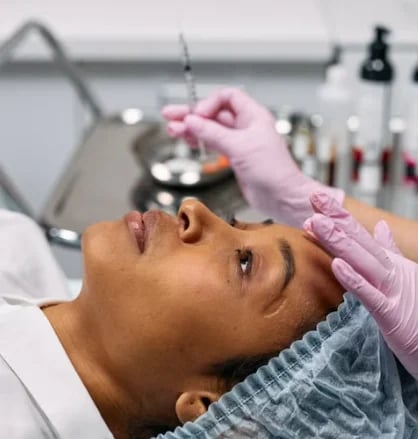
How Botox Actually Works (And Why Aftercare Matters)
Botox (botulinum toxin type A) works by blocking the signal between your nerves and muscles. When you inject it into the muscles that create wrinkles-the muscles that furrow your brow or crease your forehead-those muscles gradually become unable to contract as forcefully. That’s what reduces wrinkles. But here’s the key: the blockade is not instant. The Botox has to travel from where it’s injected into the muscle, bind to nerve endings, and block the neurotransmitter acetylcholine. That process takes time.
This is why aftercare matters. For the first 24 to 48 hours after injection, the Botox is still establishing that blockade. During that window, anything that moves the Botox around-massage, pressure, intense exercise-can move it away from the target muscle or into unintended neighboring muscles. That doesn’t mean you can never move your face again. It means being thoughtful about it.
Immediately After Your Appointment (Hours 0-4)
You will feel fine. You might see a tiny injection mark that fades within minutes. You won’t look any different because Botox doesn’t change how you look immediately-it changes how your face moves. There’s nothing to wait and see in the mirror yet.
Do this: Stay upright for at least four hours. This sounds odd, but the reasoning is solid: keeping your head up helps the Botox stay where it was injected before gravity and muscle movement redistribute it. If you lie down immediately, you’re working against gravity. Sit at a desk, walk around, keep your head up.
Avoid this: Don’t massage the injected areas. Don’t press on your face. Don’t intentionally exercise the muscles that were treated (no aggressive frowning, no forced raising of eyebrows to check if it’s working-I know you want to, but resist). Don’t schedule a hot yoga class or intense workout. Don’t apply pressure with makeup brushes or facial rollers.
Days One and Two: The Critical Window
During this period, the Botox is still settling. You won’t see visible results yet, but the mechanism is working behind the scenes. This is when the most important rules apply.
Do this: Continue staying generally upright (normal upright behavior is fine-you don’t need to sleep sitting up). Apply sunscreen. Keep your face clean but gentle; use a soft cleanser and your hands rather than a washcloth. You can do light makeup. Drink extra water (it won’t affect the Botox, but it’s good for your skin in general).
Avoid this: This is where the critical mistakes happen. Don’t massage your face, even though it might feel good or you might be tempted to “help” the Botox settle. Massage moves it around. Don’t lie down for extended periods-keep a fairly normal upright posture. Don’t exercise intensely or do anything that raises your heart rate dramatically; this increases blood flow to your face and can move the Botox. Don’t do facials, microdermabrasion, or any other face treatment. Don’t apply strong pressure to your face with tools or hands. Don’t do anything that makes you sweat profusely on your face.
The most common mistake people make in this window is over-manipulation. They’re told not to massage, so they become hyperaware of their face. They feel an itch and avoid scratching it. They’re so focused on their face that they inadvertently tense the treated muscles. This over-focus usually does more harm than good. The goal is to not interfere, which mostly means going about your day normally-just without massages, intense exercise, or heat.
Days Three to Seven: Waiting for Visible Results
By day three, you might start to see very subtle softening if you’re looking carefully. By days four to five, most people see noticeable changes. By day seven, the results are clear and obvious. But individual variation is significant; some people see obvious results by day three, others don’t see their full effect until day ten.
During this phase, the restrictions loosen considerably. The Botox has moved past the critical settling phase. It’s still binding to nerve endings, but the risk of moving it around has decreased significantly.
Do this: You can now exercise normally. You can do facials (though choose gentler options like hydrating facials rather than aggressive treatments like microdermabrasion). You can get back to normal skincare. You can apply makeup and use makeup tools. Massage is still not recommended, but gentle cleansing is fine. Sunscreen remains essential.
Avoid this: Intense facial massage is still best avoided, though light massage is generally fine by day five or six. Avoid other neuromodulators like Dysport or Xeomin during this phase-if you need additional treatment, wait until your Botox has fully settled. Very aggressive facials are still not ideal during this window, though gentler options are fine.
Week Two: Results Stabilize
By day 10 to 14, full results are evident, and they remain stable. The Botox has fully bound, and the wrinkle reduction is at its maximum for that cycle. You can do anything you want now. There are no remaining restrictions.
Do this: Everything. Exercise, facials, massage, intense treatments-there are no contraindications at this point. This is also the time to assess your results and decide if you want a touch-up in a particular area. Some people want slightly more, some are perfectly happy with the result, and some realize they preferred slightly more movement than they have now. If you’re within the first two weeks and want an adjustment, contact your provider.
Avoid this: Nothing. The critical window has passed.
Weeks Three Through 12: Maintaining and Planning Ahead
Your Botox results are now stable and will remain at this level for roughly 10 to 14 weeks, depending on your individual metabolism and how much Botox was used. Some people metabolize it faster (results fade by week 10), others maintain results through week 14 or even beyond.
During this phase, you’re either enjoying your results or you’re not, and that informs whether you want to maintain, adjust, or try something different next time.
Planning for your next appointment: Most people schedule their next Botox around week 11 or 12, so that new Botox takes effect just as the old Botox is fading, maintaining continuous smooth results. Some people prefer to let it wear off completely between appointments, which is fine-it just means being aware that wrinkles will return during the fade-out period.
Common Aftercare Mistakes That Reduce Results
Mistake 1: Massaging the Injected Areas
This is the most common error. People think they’re helping the Botox spread or settle evenly. They’re not. Massage moves the Botox away from the target muscle. If you feel an itch, gently scratch. If your face feels tight, that’s normal. Don’t massage it.
Mistake 2: Exercising Too Intensely Too Soon
Intense exercise increases blood flow and can move the Botox around during the critical settling phase. Moderate activity is fine, but save the hot yoga, spin classes, or heavy weightlifting for day three or later.
Mistake 3: Lying Down Immediately After Treatment
Gravity matters. Lying down changes where gravity pulls the Botox and can move it away from the target muscle. Stay upright for at least four hours.
Mistake 4: Expecting Instant Results
Botox doesn’t work immediately. It takes at least three days and often a week or more to see full results. If you’re looking in the mirror the next day disappointed, wait. You’re not seeing the final result.
Mistake 5: Over-Manipulating Your Face
This is the paradox of aftercare. You’re told not to massage, so you become hyperaware of your face. You avoid normal expressions. You tense muscles you’re trying to relax. This backfires. Normal facial movement and normal daily life are fine. It’s massage and intense pressure that’s the problem, not simply living your life.
Mistake 6: Getting Other Injectables During the Settling Phase
If you want Dysport, Xeomin, or filler at the same appointment as Botox, that’s fine; they’re injected into different layers. But if you get your first injectable and then get a different one three days later, you risk moving the first one around with the second injection. Wait at least a week between different injectables.
Botox and Dermal Fillers: Can You Do Both?
Yes. Many patients benefit from combining Botox and dermal fillers. Botox prevents new wrinkles by relaxing muscles. Fillers add volume to static wrinkles and hollowed areas. They address different problems and work through different mechanisms.
If you’re doing both in the same appointment, it’s fine-both are established treatments that don’t interfere with each other. If you’re doing them separately, space them out by at least a week to avoid confounding the results or moving the Botox around. Most providers recommend Botox first, then fillers a week later, but the order isn’t critical as long as there’s spacing.
What to Expect: Full Timeline
| Timeline | What’s Happening | What You’ll See |
|---|---|---|
| Day 0-1 | Botox binding to nerve endings | No visible change |
| Day 2-3 | Continued binding, muscle contraction begins decreasing | Very subtle softening if you look closely |
| Day 4-7 | Significant reduction in muscle activity | Noticeable softening of wrinkles |
| Day 8-10 | Nearly full effect achieved | Clear, obvious results |
| Day 11-14 | Full results established | Maximum wrinkle reduction for this cycle |
| Week 3-12 | Results stable and maintained | Consistent wrinkle reduction |
| Week 10-14+ | Results begin fading | Wrinkles gradually return to baseline |
How Ageless Health Institute Approaches Botox
At Ageless Health Institute in Phoenix, dosing is planned around how your face moves, so results soften lines without flattening expression. Learn more about Botox treatment, how it can be used for a brow lift, or book a consultation.
Frequently Asked Questions
How long does it take for Botox to work?
Most people see subtle results by day three, noticeable results by day five to seven, and full results by day ten to fourteen. Some people see results earlier, others take a full two weeks. Slower response is not unusual and doesn’t mean it failed.
Can I massage Botox after it’s fully settled?
Yes. Massage is only restricted during the first 24 to 48 hours. Once results have started to show (day three onward), massage is fine. Many people get facials that include massage once they’re past the critical window, and there’s no issue.
What if I don’t like my results?
If you have too much Botox (face looks too frozen), there’s no reversal-you wait for it to wear off (typically 10 to 14 weeks). If you don’t have enough Botox (wrinkles are still visible), you can get a touch-up anytime after two weeks. If you have asymmetry or unexpected results, call your provider within the first two weeks; adjustments are often possible.
How long does Botox last?
Typical duration is 10 to 14 weeks, meaning results fade back to your baseline during that window. Some people metabolize it faster (results fade by week 8 or 10); others maintain results through week 14 or longer. Individual variation is significant.
Can I exercise after Botox?
Light exercise is fine immediately. Moderate exercise is generally okay by day two or three. Intense exercise that significantly elevates heart rate and causes sweating is best avoided for the first 24 to 48 hours.
Do I need to avoid alcohol after Botox?
Alcohol increases blood flow and can potentially move Botox around during the critical window. Most providers recommend avoiding alcohol for at least 24 hours. Avoiding it for 48 hours is more conservative and a reasonable precaution.
What’s the difference between Botox, Dysport, and Xeomin?
They’re all botulinum toxin type A, the same active ingredient. They differ slightly in formulation, which means the dosing and onset time can vary slightly. Dysport tends to spread more and may work slightly faster; Xeomin has no additives beyond the toxin itself. Results are comparable; most people choose based on which they respond to best. Ask your provider which makes sense for your concerns.
Can I get Botox while pregnant?
No. While Botox is not systemically absorbed, it’s not recommended during pregnancy or breastfeeding as a precaution. If you’re planning pregnancy, discuss timing with your provider.
Is there a “Botox look” I should worry about?
The “overly frozen” look happens when too much Botox is used or injected into wrong areas, preventing normal facial expression. This is a provider technique issue, not an unavoidable outcome. A skilled provider will use the minimum effective dose to achieve natural-looking results where you still have some movement and expression.