Anyone who has lived in Phoenix for a few years knows what the sun does to skin. The brown spots on the cheeks and forearms, the faint redness across the nose, the leathery texture on the chest and the fine lines that seem to deepen after each summer are not a matter of vanity or genetics alone. They are the accumulated record of ultraviolet exposure in one of the sunniest cities in the country. When people finally decide to do something about it, they usually arrive with a narrow question: should I get IPL or a VI Peel?
The honest answer is that these two treatments work in different ways and solve overlapping but not identical problems. IPL uses pulsed light that is absorbed by pigment and by blood vessels. A VI Peel is a medical grade chemical peel that works through the surface layers of skin and encourages them to turn over. One targets specific colored lesions with light. The other resurfaces more broadly with a topical solution. Which one is better depends on what the skin actually shows, on skin tone, on the season and on how much downtime fits into a real calendar.
This guide compares the two for sun damage specifically. It explains what each treatment does at the level of the skin, which kinds of marks respond to which approach, how skin tone changes the calculation, why timing in the desert matters more than most people expect and when a combination makes sense. It is educational and not a substitute for an examination, which is the only way to say what a particular face needs.
What Years of Desert Sun Leave Behind
Sun damage is not a single finding. It is a family of changes that tend to appear together and that respond to different treatments. Understanding which ones are present is the first step in choosing sensibly.
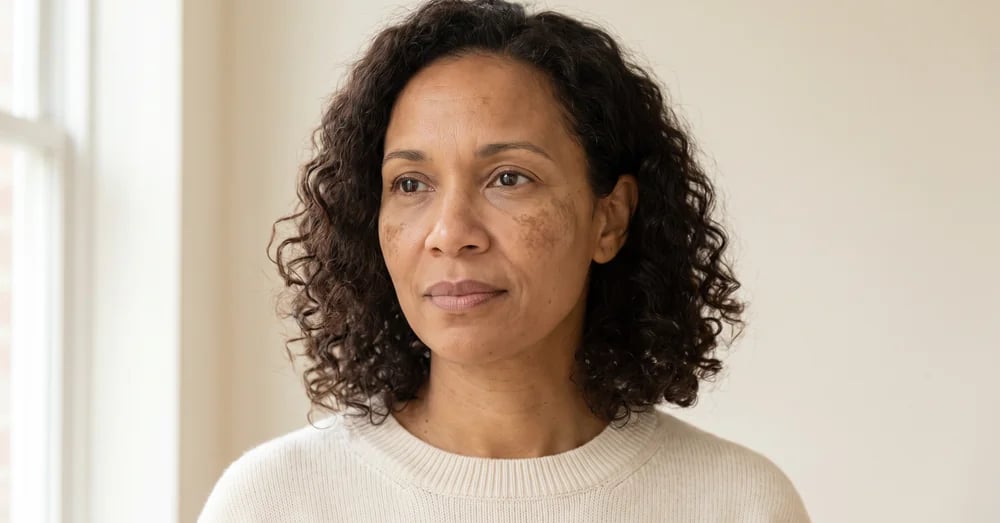
Solar lentigines, often called sun spots or age spots, are flat, well defined brown marks that appear on the face, hands, chest and shoulders. They come from clusters of pigment producing cells that were stimulated by repeated exposure. Freckles are related but tend to be smaller, lighter and more seasonal. Diffuse tanning and uneven tone, where the skin looks blotchy rather than spotted, reflects a more general overproduction of pigment.
Redness is a separate matter. Chronic sun exposure can dilate small surface blood vessels, producing a flushed look on the cheeks and nose and sometimes fine visible threads. Texture changes are a third category: skin that feels rough, looks dull or shows enlarged pores and fine lines across the cheeks and around the mouth. Thickened, scaly patches that do not go away deserve a different conversation entirely, because some precancerous changes look similar to ordinary sun damage and need to be examined by a clinician before any cosmetic treatment is planned.
How IPL Works on Pigment and Visible Vessels
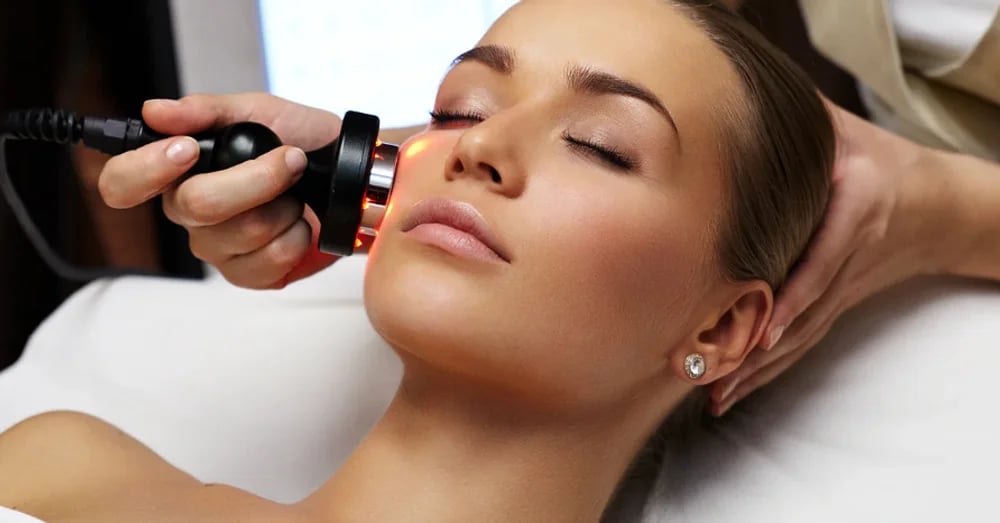
Intense pulsed light is not a laser. It delivers a broad spectrum of light in short pulses, and filters narrow that spectrum to the wavelengths most useful for the target. In sun damaged skin, the main targets are melanin in brown spots and hemoglobin in small red vessels.
When pigment absorbs the light, it heats and fragments. Over the following days the treated spots typically darken, become crusty or look like coffee grounds, and then flake away as the skin renews. Redness responds differently: the light is absorbed by blood within small vessels, which are gradually reduced, so diffuse flushing and fine threads can fade over a series of sessions.
IPL treats a whole area at once, which is why it is often described as a photofacial. Because the light is selective for color, it tends to work best on discrete brown spots and on redness, and less well on texture or on pigment that sits deep. It is also less forgiving of tanned skin, a point that becomes important in Phoenix, where a recent tan is common even among people who think they are careful.
How a VI Peel Resurfaces Without Light
A VI Peel is a blend of ingredients applied to the skin, including trichloroacetic acid, salicylic acid, phenol, vitamin C and retinoic acid related compounds, designed to penetrate to a controlled depth. It is a medium depth style of peel in concept, yet it is often described as more comfortable than traditional deep peels because the formulation is built to limit discomfort and shorten recovery.
The skin that was treated typically tightens, darkens slightly and then sheds over several days, revealing newer skin beneath. Because the peel acts across the whole treated surface rather than on individual targets, it addresses uneven tone, fine lines, rough texture and general dullness together. It also helps with diffuse pigment such as melasma related discoloration and with the freckled, sun worn look that does not come down to a handful of discrete spots.
Peels do little for visible blood vessels, since the solution does not reach them. That single difference explains much of the decision between the two treatments.
Matching the Treatment to the Mark
The simplest way to compare the two is to look at what each one is good at.
Discrete brown spots on the cheeks, temples, hands and chest are the classic IPL target. The light finds them directly, and many people see them lift within a week or two of a session. A peel can also lighten them, but it does so indirectly, by speeding the shedding of the pigmented layer.
Redness and fine surface vessels point toward IPL, because a peel is not designed for them.
Rough texture, dullness, early fine lines and a generally weathered surface point toward a peel, because resurfacing is exactly what it does. IPL can modestly improve tone and brightness as a side effect, but it is not a resurfacing tool.
Blotchy, uneven pigment with no clearly defined spots can respond to either, and is often the best case for a peel, particularly on skin that is not a good IPL candidate.
When several of these exist at once, which is common after years in the desert, a clinician may recommend sequencing the two rather than choosing one. The question then becomes order and spacing, discussed further below.
Skin Tone Changes the Safe Choice
Skin tone is one of the most important variables, and it cuts in different directions for each treatment.
IPL relies on contrast between the target and the surrounding skin. On lighter skin, brown spots stand out and the light is absorbed mostly by them. On darker skin, or on skin with a fresh tan, the surrounding tissue also absorbs light, which raises the risk of burns, blistering and pigment changes, including lasting lightening or darkening. For that reason, IPL is generally approached with caution, with test spots and conservative settings, or avoided altogether in deeper skin tones. Practitioners vary in how they handle this, which is one reason the experience of the person performing the treatment matters.
Chemical peels also carry a pigment risk. Inflammation after a peel can trigger post inflammatory hyperpigmentation, particularly in darker skin tones or in skin that is exposed to sun during healing. Peels are widely used across skin tones, but the choice of formulation, strength and preparation changes, and an experienced provider tailors them accordingly.
The practical takeaway is that neither treatment is universally safe or unsafe. An assessment of skin type, tanning history, medications and healing pattern drives the plan.
Why Phoenix Timing Matters More Than the Treatment Itself
In many parts of the country, a provider can treat in almost any month. In Phoenix, season shapes outcomes.
Both treatments make the skin temporarily more vulnerable to sun. IPL leaves treated areas sensitive and can cause pigment to behave unpredictably if exposed to strong ultraviolet light shortly before or after. A peel leaves newly forming skin that is thinner and more reactive. In a city where midday sun is intense for much of the year, and where a short walk from the car to the office can add exposure, the margin for error is smaller.
That is why many patients in the region choose autumn through early spring for these treatments, when days are shorter and outdoor exposure is easier to manage. It is possible to treat in summer, but it requires stricter sun avoidance, an honest assessment of weekly exposure and often a more conservative plan. A fresh tan is among the most common reasons a planned IPL session is postponed.
Heat has a second effect. Warm skin swells and flushes more easily, so a treated face after a hot afternoon can feel and look more irritated than the same treatment in cool weather. Planning sessions on days with fewer outdoor commitments, and keeping the skin cool during recovery, makes a noticeable difference.
What Recovery Looks Like for Each
Recovery experiences differ, and knowing them in advance prevents unwelcome surprises.
After IPL, the face is typically pink or flushed for a few hours and may feel warm, like a mild sunburn. Brown spots darken within a day or so and may look more noticeable before they lift. Flaking or small scabs can last from several days to about two weeks. Most people return to normal activities right away, using makeup only after the clinic says the skin is ready for it.
After a VI Peel, the skin tightens and darkens over the first couple of days and then begins to peel, usually from day three or four, continuing for about a week. The peeling can be visible, especially around the mouth and nose, and it should not be picked or pulled. Many people plan the peel for a time when they can be at home or comfortable looking flaky for several days.
In both cases, the skin should be protected from the sun, kept moisturized with gentle products and cleaned without scrubbing. Specific instructions come from the clinic after treatment and should take priority over general advice. The comparison between the two recoveries is largely a comparison between a short flush with later flaking and a more visible but predictable week of shedding.
Results, Timelines and What to Expect
Results depend on the starting point. With IPL, discrete spots often clear substantially within one to two weeks of a session, while redness and overall tone improve more gradually across a series. Many treatment plans involve multiple sessions spaced several weeks apart, because not every spot responds to the first pass and because the skin needs time to recover between treatments.
With a VI Peel, new skin appears as shedding finishes, and many people notice improved brightness and tone shortly after. Texture and fine lines continue to improve over the following weeks as skin renews. One peel can make a visible difference, though patients with more pronounced damage may need more than one over time.
Neither treatment erases the effect of years of sun, and neither stops it from continuing. Spots can return when the skin is exposed again, which is why sunscreen is not an optional extra but part of keeping results.
When Combining the Two Makes Sense
Because the treatments address different problems, some patients benefit from using both in sequence rather than choosing one. A common logic is to treat discrete spots and redness first with IPL, allow the skin to recover, and then use a peel later to refine texture and tone. Another is to start with a peel for general surface improvement and add IPL to address remaining spots or vessels.
The spacing matters. Layering two treatments too closely can inflame the skin and raise the risk of pigment problems, so providers generally separate them by weeks and decide the order based on what is most bothersome and what the skin tolerates. The broader principle of spacing treatments sensibly is something a clinician plans around the individual.
Preparing Skin Before Either Treatment
Preparation affects outcomes more than people realize. Avoiding sun exposure and tanning beds beforehand is the most important step, since tanned skin raises the risk of complications with IPL and complicates peel planning. Many providers also review skincare actives such as retinoids and exfoliating acids, which may need to be paused for a period before treatment. Medications that increase sun sensitivity, including some antibiotics, should be mentioned during the consultation.
A history of cold sores is worth raising as well, since facial treatments can trigger an outbreak and a preventive plan may be advised. Pregnancy, certain skin conditions and recent isotretinoin use also change what is appropriate. None of these are reasons to be anxious. They are reasons to give a clinician a complete picture before anything is applied or any light is delivered.
Sunscreen, Hats and Habits That Protect the Result
Sun protection after treatment is not about perfection. It is about consistency across the weeks when skin is most vulnerable and across the years that follow. A broad spectrum mineral or hybrid sunscreen applied every morning and reapplied during extended outdoor time is the foundation. Hats, sunglasses and shade add to it.
Phoenix adds some local wrinkles. Windows in cars let ultraviolet A through, so the left side of the face often shows more damage in people who spend years driving. Reflection from pavement and light colored surfaces adds exposure. Early morning and late evening outdoor time is easier on skin than midday. These are small adjustments, but they compound.
What Neither Treatment Is Meant to Do
It is worth being direct about limits. Neither IPL nor a VI Peel treats skin cancer, and neither should be used on a lesion that is changing, bleeding, growing or looks unusual. A mole or spot that has irregular borders, multiple colors or has changed over time needs a dermatologist, not a photofacial. Treating a suspicious lesion cosmetically can delay a diagnosis.
Similarly, neither tightens loose skin or fills volume loss. Sun damage and aging overlap, and many people find that after spots and texture improve, they notice other changes that were previously masked. That is a natural point to discuss other options with a provider, rather than expecting a single treatment to do everything.
How a Consultation Narrows the Choice
A good consultation looks at the skin in good light, often with magnification, and asks about sun history, tanning, medications, past reactions and goals. It identifies which of the findings above are present, estimates how much downtime is realistic and proposes a plan with a sensible order. It may include a test spot, particularly for IPL on borderline skin tones.
The best sign of a thoughtful recommendation is that it can explain why one treatment fits and the other does not. If the answer is the same for every face, the plan is probably driven by what a clinic sells rather than by what the skin needs.
For a person with scattered brown spots, some redness, light skin and no recent tan, IPL is often the more direct choice. For someone with rough, dull, uneven skin and diffuse pigment, a peel often fits better. For someone with both, a staged plan can address each problem in turn. For deeper skin tones or recent tanning, the safer course frequently leans toward a carefully chosen peel or toward waiting until the skin is ready.
The common thread is that the choice follows the skin, the season and the calendar rather than a preference for one technology. Patients in Phoenix who treat sun damage in the cooler months, protect the result and see an experienced provider usually find that the decision is clearer than it seemed at the start.
Frequently Asked Questions
Is IPL or a VI Peel better for sun spots?
For discrete brown spots, IPL is usually the more direct option because the light targets pigment. A VI Peel can also lighten them and is often preferred when the pigment is diffuse or skin tone makes IPL less suitable.
Which treatment helps with redness from sun damage?
IPL, because it targets blood vessels. A peel is not designed to treat visible vessels or diffuse redness.
Can both treatments be done in the same year?
Often yes, with spacing. Providers typically separate them by weeks and decide the order based on the skin’s needs and recovery.
Is it safe to get IPL with a tan?
It raises the risk of burns and pigment changes, so most providers postpone treatment until a tan has faded. Tell the clinic about recent sun exposure.
When is the best time of year for sun damage treatment in Phoenix?
Many patients choose autumn through early spring, when daily sun exposure is easier to limit. Summer treatment is possible with stricter sun avoidance and a conservative plan.
Will brown spots come back after treatment?
They can, because the skin is still exposed to the same sun. Daily sunscreen and shade habits are what protect the result.
How long does recovery take?
After IPL, flushing fades within hours and spots flake over about one to two weeks. After a VI Peel, peeling typically runs for about a week. Individual recovery varies.